Quiz Slayer
Case study
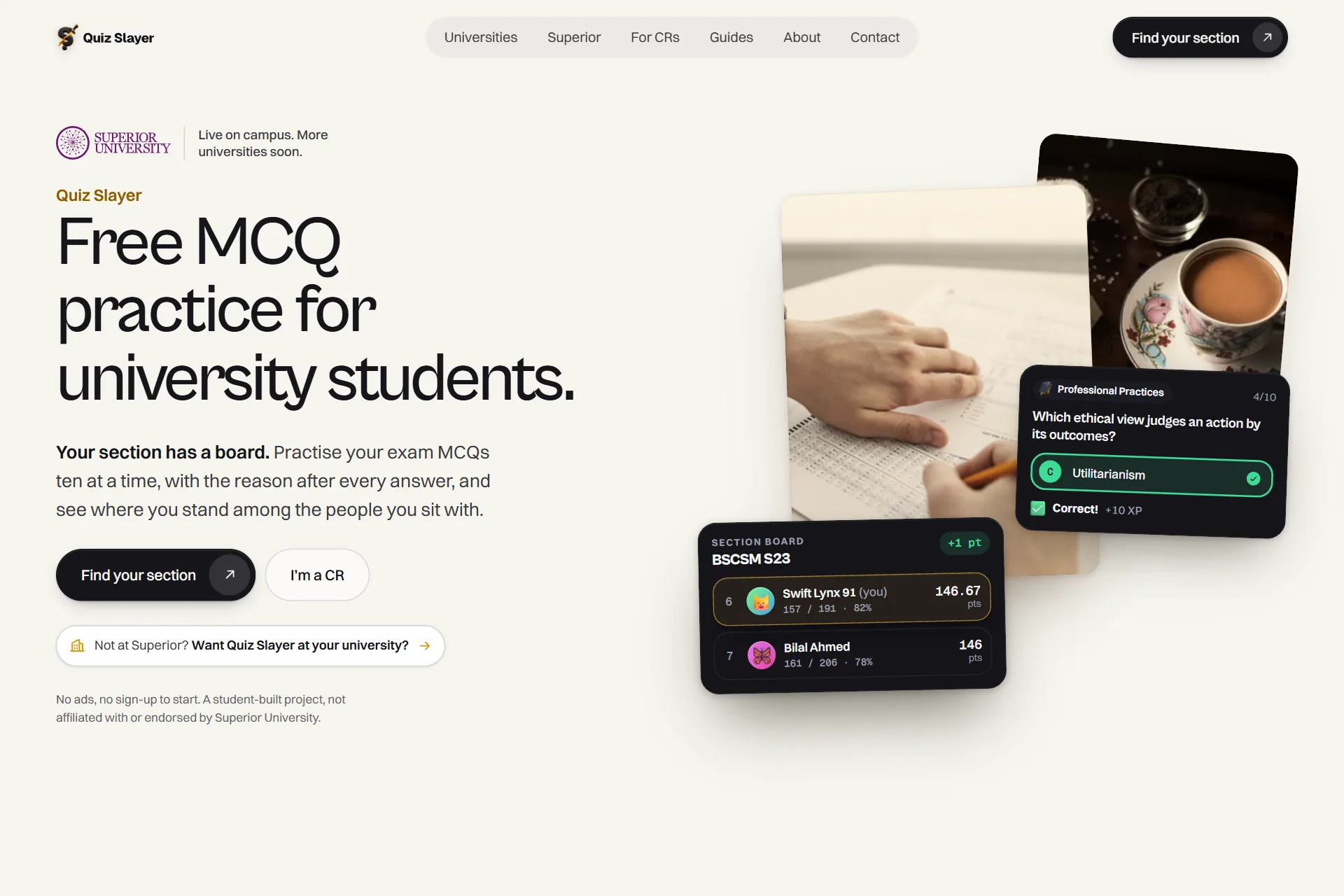
All projectsQuiz Slayer (quizslayer.app) is a free MCQ practice app for university students: ten questions at a time, the reason after every answer, and a board for each class section.
- Client
- My own product
- Type
- MCQ practice platform
- Year
- 2026
- Published
- Live
- quizslayer.app
Stack
- Astro 7
- React 19
- TypeScript
- Vite 7
- Tailwind CSS 4
- Workbox (PWA)
- Convex
- Convex Auth (Google)
- Cloudflare Workers
- Cloudflare R2
The problem
Universities here now hold midterms and finals on computer, as multiple choice. What students had to prepare from was a PDF or a Word file of past questions with the answers at the back. You read a question, look down, and find out you were wrong without finding out why.
The practice apps that do better want an account before the first question and a connection for every tap, and they rank you against strangers. That's the wrong shape for a cheap phone on patchy data the night before a paper, and a stranger's score tells you nothing. The people worth comparing yourself with are the ones you sit with.
Where it started
I built the first version for my own class. One installable app: the question bank shipped with it, every answer was marked on the device the moment you pressed a key, and the reason sat right underneath. No account needed to play.
It had one leaderboard, and I built that part twice. The first version took the score the phone sent, which meant it took anything. Now the phone sends only which option it picked for which question, and the backend, on Convex, grades that against its own copy of the answer keys. A question earns a point the first time you get it right and never again, and a wrong answer costs 1 ÷ (options − 1) of a point, so blind guessing averages zero. The scoring has a post of its own.
In the November midterms about 60 classmates used it. They answered 20,154 questions and got 80% of them right, across 484 quizzes (the admin dashboard on 23 November, a snapshot, not a live count). After the papers the request was the same from everyone: make it for the other sections too.
One app per university, one board per section
So Quiz Slayer became a product with its own home at quizslayer.app. Each university gets its own address, superior.quizslayer.app first, and one Cloudflare Worker serves every one of them. The app reads which university it is from the hostname, so adding one is data, not a new deploy.
Inside a university, students sit in a program, a batch and a section, the same way the timetable has them. You find yours by roll number, by your university Google account, or by picking it. Your roll number is never shown on a board, to classmates or to your CR.
There are two boards. The section board ranks the people you sit with. The subject board ranks everyone across the university taking that subject, so a section can see how it compares. You appear once you've answered 20 questions. Boards start again from zero each semester, the final standings are kept, and when a batch graduates its sections are archived on their own. Guests can still play without signing in. Google sign-in is what carries your points to any phone or laptop.
The class keeps its own questions right
Every section can have a CR and a Co-CR. Students apply from inside the app, and a CR edits the section's questions and keys in Manage section. When a key is wrong, any student can report it, the CR fixes it once, and the whole class has the fix in their next round instead of waiting for a new PDF.
Behind that is a staff console at its own address. Roles run from owner to admin, helper, CR and Co-CR, each scoped to everything, one university or one section, and what each can do comes from 58 permission keys in eight groups. Every change writes an audit row that can be reverted. Personal details such as an email address or a roll number stay masked unless a role holds the key to reveal them. Guest play has its own limits per network and per player per hour, which I can change from the console without a deploy.
Built to stay quick on a cheap phone
All three parts run on Cloudflare Workers: the marketing site is static Astro, the student app is a React PWA, and only its /api routes run code at the edge. Workers rather than Pages, because Pages has no wildcard custom domain and every university needs one. Question banks are stored in Cloudflare R2 under the hash of their contents, so a phone downloads a bank once and caches it for good. A change is a new file.
The app still works offline. Finished rounds wait on the device and leave when there's a connection. Quick Read goes through a subject in order with the answers shown, for the night before, and scores nothing. A copy button builds a prompt to have any AI chat explain the question, and it leaves out the answer if you haven't answered yet. It's the same web engineering I'd do on any client build.
Outcome
quizslayer.app is live: what it is, how the boards work, a page for CRs, and a form for students who want it at their own university. The student app is moving from quiz.zubyr.dev to superior.quizslayer.app, its own university address.
The 20,154 answers above are one class in one exam season, which is all I'll claim. The repository has 102 test files, and a test that fails if a backend query could read an unbounded number of rows, because a board that is fine for one class has to stay fine for a whole university.
More from the build
Figs. 2–5 — 4 more screens
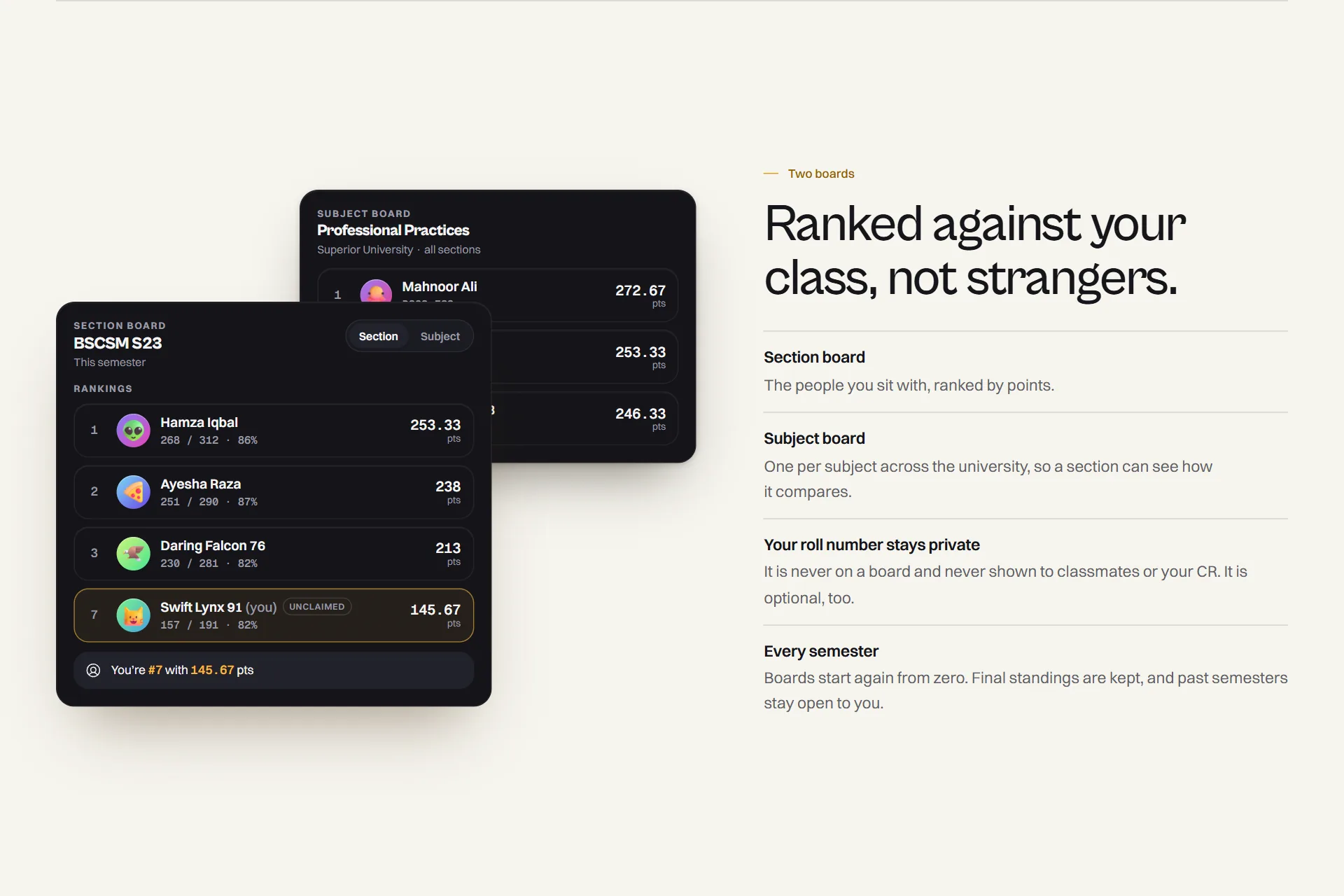
Fig. 2 — Two boards: the people you sit with, and everyone taking the same subject. Both start again each semester. 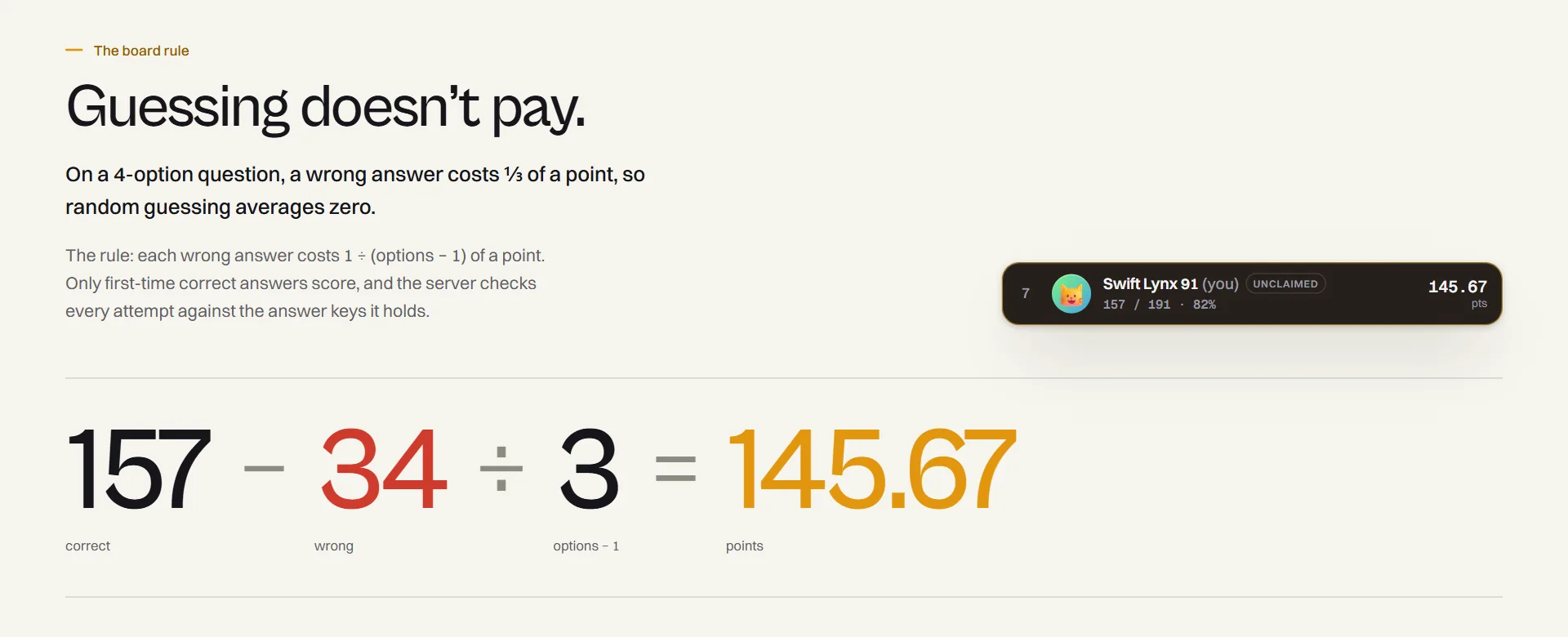
Fig. 3 — The board's one rule, written as the sum it is. 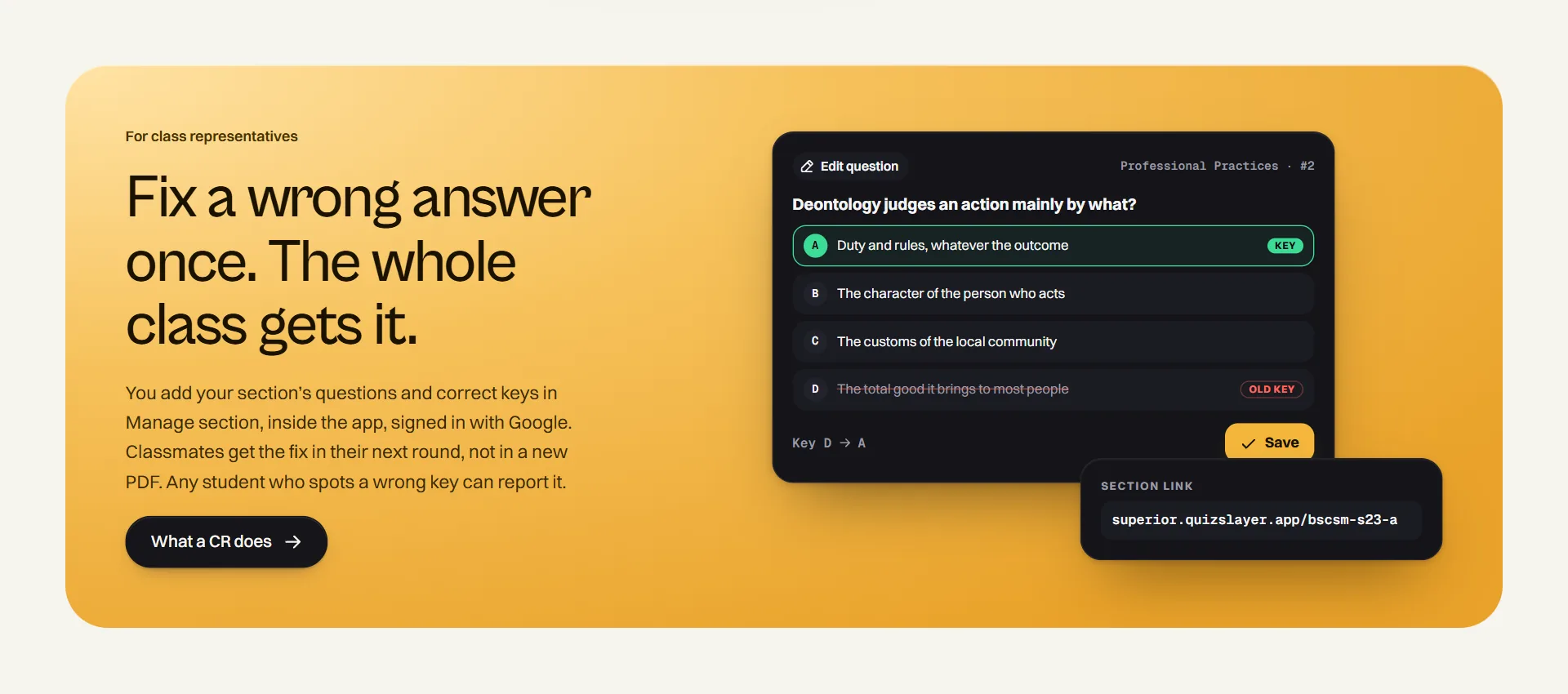
Fig. 4 — A CR fixes a key once, and the whole section has it in their next round. 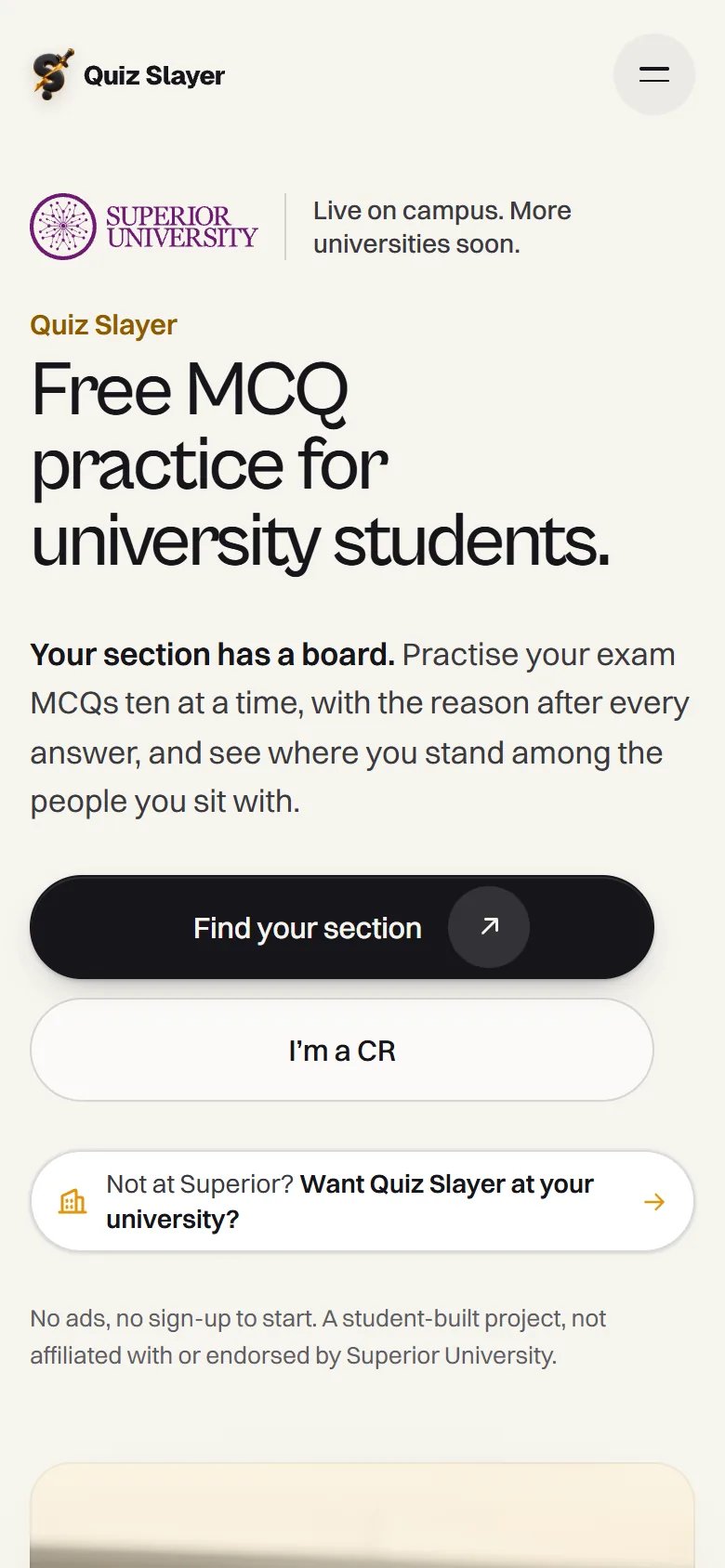
Fig. 5 — The same page on a phone, where most students open it.